



Combi Boilers & Systems
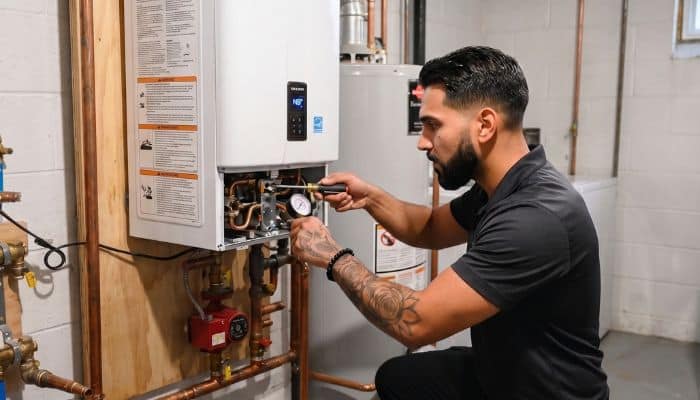
Combi Boilers & Tankless Combi Systems in Northern New Jersey
A combi boiler can provide both home heating and domestic hot water from a single system. For homeowners looking to simplify their mechanical equipment or replace an aging boiler and water heater, a combination boiler may be an option worth considering. NJPlumb provides combi boiler installation, repair, replacement, maintenance, and troubleshooting throughout Northern New Jersey.
What Is a Combi Boiler?
A combination boiler, commonly called a combi boiler, combines two functions into one appliance: heating water for the home's hydronic heating system and producing domestic hot water for showers, sinks, and other household fixtures.
Unlike a traditional boiler and separate water heater setup, a combi system can provide hot water on demand without relying on a dedicated storage tank.
Boiler + Domestic Hot Water in One System
One of the primary features of a combi boiler is its ability to handle both heating and domestic hot water. When the home needs heat, the boiler supplies the hydronic heating system. When a hot-water fixture is turned on, the system can switch to producing domestic hot water.
This combination can save mechanical space and eliminate the need for a separate traditional water heater in many applications. The right system still depends on the home's size, heating requirements, hot-water demand, and existing plumbing and heating configuration.
Tankless Combi Systems
Tankless combi systems take the combination concept a step further by producing domestic hot water as it is needed rather than storing a large volume of heated water in a tank.
For homeowners who want both hydronic heating and tankless hot water, a combi system can provide both functions from one piece of equipment. Proper sizing is important, particularly for homes with multiple bathrooms or higher simultaneous hot-water demand.
Combi Boiler Installation
Installing a combi boiler requires more than simply replacing an existing boiler. The equipment needs to be properly matched to the home's heating and hot-water requirements and connected to the existing plumbing, hydronic heating, controls, venting, and other system components.
NJPlumb can evaluate the existing system and help determine whether a combi boiler is appropriate for the property.
Combi Boiler Repair
A combi boiler that isn't providing heat or hot water may have an issue with circulation, controls, sensors, valves, ignition, water flow, or another component.
Because a combi system serves both heating and domestic hot water, a problem with the equipment can affect one function or both. Professional troubleshooting can help identify the source of the problem before unnecessary parts are replaced.
Combi Boiler Replacement
An aging combi boiler that requires frequent repairs, has declining performance, or has developed a significant component problem may eventually need replacement.
Replacement also provides an opportunity to evaluate whether the existing combi system is properly sized for the home. NJPlumb can assess the condition of the system and discuss available replacement options.
Combi Boiler Maintenance
Regular maintenance can help identify developing problems and keep the system operating properly. Maintenance may include inspecting system components, checking operation and controls, evaluating circulation, and looking for signs of leaks or other issues.
Following the manufacturer's recommended maintenance requirements can also help identify problems before they become an unexpected no-heat or no-hot-water call.
Common Combi Boiler Problems
Common problems can include no heat, no hot water, inconsistent water temperature, pressure issues, leaks, unusual noises, ignition problems, circulation problems, and system error codes.
Because combi boilers perform two jobs, troubleshooting requires looking at both the heating and domestic hot-water sides of the system.
When Does a Combi System Make Sense?
A combi system may make sense for homeowners who want to combine heating and domestic hot-water production into one appliance, have limited mechanical space, or are replacing older heating and water-heating equipment.
However, every home is different. Household size, simultaneous hot-water demand, existing heating zones, fuel source, available space, and the condition of the existing system should all be considered before selecting equipment.
Combi Boiler vs. Traditional Boiler
A traditional boiler is designed primarily to heat water for the home's hydronic heating system and is typically paired with a separate water heater for domestic hot water.
A combi boiler combines those functions into one appliance. This can reduce the amount of equipment required, but the system must be appropriately sized for both heating and hot-water demand.
Combi Boiler vs. Tankless Water Heater
A combi boiler and a tankless water heater both produce domestic hot water without a traditional storage tank, but they serve different purposes.
A tankless water heater is designed primarily to produce domestic hot water. A combi boiler provides domestic hot water while also serving the home's hydronic heating system.
If your home already uses hydronic heating and you are considering replacing both heating and hot-water equipment, a combi system may be worth evaluating.
No Hot Water or No Heat? Troubleshooting Your Combi System
If your combi boiler isn't producing hot water or your home isn't heating properly, check the thermostat and look for any visible system alerts or error codes. If the problem continues, professional troubleshooting may be necessary.
Avoid repeatedly resetting a malfunctioning system without identifying the cause. A qualified technician can determine whether the issue involves circulation, controls, ignition, water flow, pressure, or another component.
Combi Boiler Service in Northern New Jersey
NJPlumb provides plumbing and heating services throughout Northern New Jersey, including combi boiler repair, installation, replacement, maintenance, and troubleshooting. If you're considering a combi boiler or your existing system isn't providing reliable heat or hot water, contact NJPlumb to discuss your options.
A combi boiler, or combination boiler, provides both home heating and domestic hot water from a single appliance. Unlike a traditional boiler paired with a separate water heater, a combi boiler can produce hot water on demand without requiring a separate storage tank.
A combi boiler heats water for the home's hydronic heating system and produces domestic hot water when a faucet or shower is turned on. The system switches between heating and hot-water demands as needed.
A tankless combi system combines hydronic home heating with tankless domestic hot-water production. Instead of storing hot water in a traditional tank, the system heats water as it is needed while also providing heat for the home.
No. A tankless water heater is designed primarily to provide domestic hot water, while a combi boiler provides domestic hot water and also heats the home through a hydronic heating system.
A combi boiler can combine home heating and domestic hot-water production into one appliance. Depending on the home and its heating and hot-water requirements, this can reduce equipment requirements and eliminate the need for a separate traditional water-heater tank.
The right system depends on factors such as the home's size, heating requirements, number of bathrooms, hot-water demand, existing heating system, available space, and fuel source. A professional evaluation can help determine whether a combi system is appropriate.
Common problems can include no heat, no hot water, inconsistent water temperature, low or abnormal pressure, leaks, unusual noises, ignition problems, circulation issues, and system error codes. Professional troubleshooting can identify the source of the problem.
Regular maintenance can help identify developing problems and keep the system operating properly. Service intervals should also follow the manufacturer's recommendations and take into account the equipment's age, condition, and operating environment.
In many applications, a combi boiler can provide both home heating and domestic hot water from one appliance. Whether it can replace the existing equipment depends on the home's heating system, hot-water demand, equipment capacity, and installation requirements.